
A new entry point into software development
GeneXus for Agents opens the Knowledge Base to AI agents, so business knowledge outlasts any IDE, model or technology.

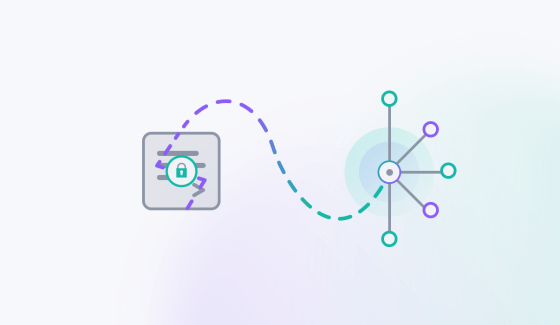
Software development teams are incorporating artificial intelligence agents into their workflows. In that context, GeneXus brings a unique advantage: business knowledge is not scattered across source code, but structured in the Knowledge Base.
GeneXus for Agents is the platform capability that connects intelligent agents with that knowledge, so they can interpret the system context, analyze information, and propose changes with greater precision. The GeneXus engine then validates those proposals and generates code in a deterministic way.
In this guide we explain what GeneXus for Agents is, how it works, and how to take your first steps.
From the Download Center, available for Mac, Windows, and Linux. GeneXus for Agents is already included, so no additional installation is needed.
Tip: If you want access to the latest features before the stable release, use the GeneXus Canary Channel.
In GeneXus, context is delivered to the agent through a skill called Nexa. It is what turns any compatible agent into a collaborator that understands how to write GeneXus: its objects, its rules, its modeling approach. It can be downloaded from github.com.
You can use any of these compatible agents:
There is no lock-in: you choose which one to work with and can switch at any time.
The developer tells the agent what needs to be built. For example: “I need a feature to approve leave requests for the sales team members with more than 5 years of seniority.”
The agent, using the Nexa skill and through the MCP client (GeneXus Next CLI) and the MCP server (GeneXus MCP Server), accesses the KB, understands its structure, and determines exactly which objects to work with: which ones to create, reuse, or modify.
The AI reasons. GeneXus acts. Changes suggested by the agent are automatically validated by the GeneXus engine, and the developer can review and approve each modification before it is integrated into the KB.
Once validated, GeneXus generates code deterministically for the target technology, as it always has. And if that target technology changes in the future, GeneXus can rewrite the system deterministically for the new platform, without starting from scratch.
To help teams take their first steps in an organized and frictionless way, GeneXus published the GeneXus for Agents Quick Start, a getting-started guide designed for developers who already know the platform.
The Quick Start covers eight modules:
The Quick Start is compatible with GeneXus Next and GeneXus 18 Knowledge Bases. If your KB is on an earlier version, migrating to GeneXus 18 is all it takes to get started.
Access the Quick Start in your language:
For a deeper dive, the full technical documentation is available on GeneXus Wiki.
GeneXus and Neuro-Symbolic Architecture
The Problem with Prompt-Based Development
eneXus for Agents: 15 key questions answered
GeneXus for Agents opens the Knowledge Base to AI agents, so business knowledge outlasts any IDE, model or technology.

As AI agents reshape software development, GeneXus keeps knowledge at the center - turning intention into reliable, enterprise-grade software
We asked developers who are already working with GeneXus for Agents what their impression of the product is. Here's what they said.
Leave a Reply